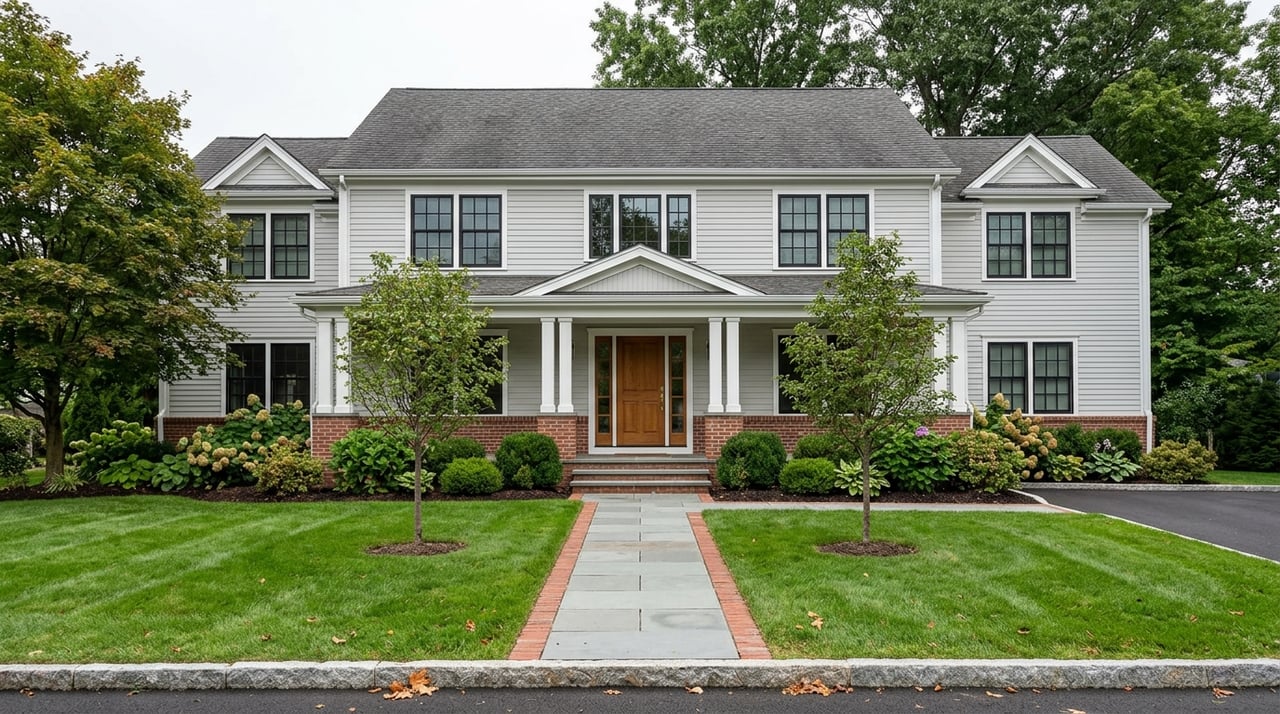
How Newton Villages Shape Your Home Pricing Strategy
June 4, 2026
June 4, 2026
Wondering why one Newton home sells in a few weeks while another sits, even when both look strong on paper? In Newton, pricing is rarely just about square footage or a citywide median. Your village, your property type, and even your historic district status can shape what buyers will pay and how quickly they will act. If you are thinking about selling, understanding those village-level differences can help you set a smarter strategy from day one. Let’s dive in.
Newton is built around 13 distinct village centers, and that history still shows up in today’s housing market. The City of Newton notes that many of these villages grew from railroads, mills, rivers, and local commercial centers. That layered development created neighborhoods with different streetscapes, lot patterns, home styles, and buyer expectations.
Those differences matter because Newton is already a high-value, fast-moving market overall. Recent public market snapshots show citywide median pricing well above $1.6 million, with homes often moving in under a month. But broad city numbers can hide meaningful pricing gaps between villages.
A buyer does not evaluate every Newton address the same way. A home in Waban, Newton Centre, Nonantum, or Auburndale may attract different expectations based on setting, housing stock, and recent nearby sales. That is why pricing strategy in Newton should start with the village first, then narrow further.
Some villages have long histories as commuter suburbs with larger lots and older architectural homes. Others developed with denser housing or a more industrial background. Those patterns still influence how buyers compare homes today.
Chestnut Hill is described by the City of Newton as an architecturally important and intact historic neighborhood with large homes, landscaped lots, and winding streets. Newton Centre and Waban grew with improved rail access in the late 19th century, helping establish them as classic commuter villages.
Auburndale, Newtonville, and West Newton also developed around rail access and feature notable older housing stock on relatively generous lots. By contrast, Nonantum and Newton Upper Falls reflect more mill-village and working residential roots, with denser or more modest historic development patterns. None of this determines value on its own, but it does help explain why pricing bands differ across Newton.
Current public listing data shows just how broad the spread can be across villages. In March 2026, reported median asking prices ranged from about $1.395 million in Newton Highlands to about $2.4995 million in Waban. Newton Centre was reported at $2.348 million, while villages like Nonantum, West Newton, Auburndale, and Newton Corner landed at lower but still substantial levels.
That spread is a strong reminder that a citywide Newton average is only a starting point. If you price your home off a general Newton headline instead of your own village, you risk either leaving money on the table or overshooting the market.
| Village | Reported Median Asking Price |
|---|---|
| Waban | $2.4995M |
| Newton Centre | $2.348M |
| Newtonville | $1.939M |
| Upper Falls | $1.8385M |
| Nonantum | $1.738M |
| West Newton | $1.5985M |
| Newton Corner | $1.485M |
| Auburndale | $1.41975M |
| Newton Highlands | $1.395M |
These are asking prices, not closed sales, so they should not be treated as final value. Still, they show how far apart village pricing can be before negotiations even begin.
List prices give you a range, but recent sold data helps shape a realistic pricing plan. In Newton Centre, public sales data over the last three months showed a median sold price of $2.299 million and 22 days on market. Yet even there, one home sold 9% over list in 27 days while another sold 4% under list after 246 days.
That kind of spread tells you something important. In a premium village, the address alone does not guarantee a premium result. Condition, pricing discipline, and presentation still matter.
Newton Highlands had a reported median sold price of $1.36 million, 28 days on market, and a 100.1% sale-to-list ratio. But the recent examples varied sharply. An attached unit closed 11% over list in 15 days, another sold 5% under list after 86 days, and a separate home sold at $2.0 million, 6% over list, in 48 days.
That is why you cannot lump every sale in the same village into one basket. A single-family home, townhouse, and attached unit may all compete in different lanes, even if they are only blocks apart.
In Nonantum, public data showed a median sold price of $1.469 million and a slower 63 days on market, with a 97.9% sale-to-list ratio. Recent sales ranged from a property that closed 6% under list after 195 days to another that sold 4% over list in 19 days. A unit-style home also sold slightly over list in 50 days.
This shows how price sensitivity can show up more clearly in some villages. Buyers may still move quickly for the right listing, but stretched pricing can lead to a much longer marketing period.
Waban posted some of the most dramatic pricing swings in the sample. Recent public sales included homes that sold 20% and 23% over list, but others closed 1%, 4%, and even 13% under list. Days on market also varied from the upper 30s to over 100.
For sellers, that is a useful reality check. A prestigious village can create strong demand, but it does not remove the need for smart positioning. Buyers at the upper end are often highly informed and selective.
If you are pricing a Newton home, the best place to begin is with recent comparable sales from the same village. Public data supports that approach. Newton Centre’s median sold price over the last three months was roughly $830,000 higher than Nonantum’s, and its median days on market were much shorter.
That gap is too large to ignore. A seller in Newton Centre should not rely on citywide averages, and a seller in Nonantum should not price against Waban or Newton Centre just because the home has similar square footage.
After village, the next filter is property type. A detached single-family home should be compared against recent detached single-family sales. The same goes for attached homes, condo-style residences, and townhomes.
The public examples across Newton Highlands, Nonantum, Auburndale, West Newton, and Newtonville all point to the same lesson. Similar addresses do not always produce similar results if the product type differs.
Historic character can be a selling point, but it can also affect your preparation timeline. Newton has four established Local Historic Districts: Auburndale, Chestnut Hill, Newton Upper Falls, and Newtonville. According to the City of Newton, exterior changes in those districts require review under local ordinance and Massachusetts Chapter 40C.
That does not mean every home in those villages is affected, since the districts do not cover each entire village. But if your property falls within one of those districts, it may influence what updates you can make before listing and how quickly those updates can happen. That should be part of your pricing and prep conversation early.
Village-level data is powerful, but it needs context. In April 2026, Newton Centre had 9 reported sales, Newton Highlands had 14, and Nonantum had 17. When the sample is that small, one unusually high or low sale can pull the median up or down.
That is why a headline median should never be your entire pricing strategy. A better approach is to study several recent comps, look at days on market, note list-to-sale patterns, and account for condition, style, lot, and finish level.
For most Newton sellers, a strong pricing plan follows a simple order:
That last point matters more than many sellers expect. In a market like Newton, strong preparation can help support stronger pricing, especially when buyers are comparing polished listings side by side.
Pricing and presentation work together. If your home is entering a village where buyers expect a certain level of finish, curb appeal, or move-in readiness, your sale strategy should reflect that before the home goes live.
That is where hands-on pre-sale planning can make a difference. Thoughtful decluttering, staging, budget-conscious touch-ups, and curb appeal improvements can help your home compete more effectively within its village and price bracket. In a market with clear micro-markets, details can shape both speed and outcome.
Newton is not a one-size-fits-all market. Its villages have different histories, housing stock, pricing ranges, and buyer behavior, and public sales data shows those differences clearly. If you want to price well, you need more than a Newton average.
You need a strategy built around your village, your property type, your condition, and your timing. If you are preparing to sell in Newton and want a pricing plan backed by local expertise and thoughtful pre-sale guidance, the Christman Johnsson Group can help you build a clear path to market.
Stay up to date on the latest real estate trends.


Whether you're buying, selling, or just exploring your options in Brookline, Newton, and the Greater Boston area, connect with us today. Let's discuss your goals and how we can help you achieve them, one step at a time.